
Deputation
Last time 6th Edition of Festikids had a proposal from Educational concerts in the province of Grenade. The result was the concerts held in Armilla, Guadix and Fuente Vaqueros as part of the Festival.
The great reception from the public's perspective and the experience of combine professional and children's groups from educational centers, They made it a success, and many music teachers and directors have been involved. educational centers in the province who have expressed their desire to have performances in their towns this coming May. Performances in which they will collaborate in some cases as audience members and in others as performing audience members.
This edition of Festikids, The 7th, which will be held in May 2026 It has therefore been organized as a result of the relationship and close support of the Granada Provincial Council three concert proposals and one training activity:
Fault, roots, and time
May 15th. Source: Vaqueros
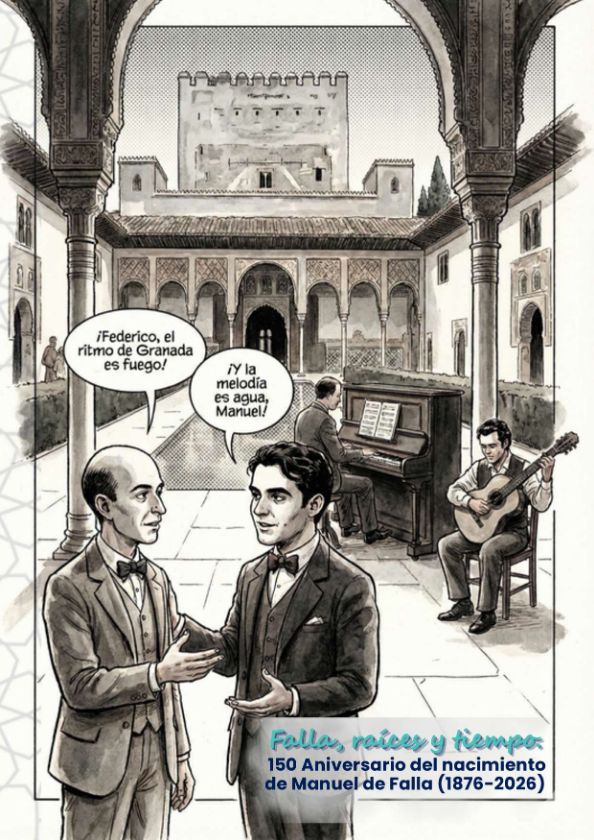
Falla, roots and time. 150th Anniversary of the birth of Manuel de Falla (1876–2026) It's a show that brings together many things.
The show is structured in three acts that explore Manuel de Falla's relationship with music and the importance of cultural roots. In the first act, an introspective dialogue of the composer is presented, which then shifts to the musical realm, combining his own works with historical repertoire. The second act places Falla in Granada alongside Federico García Lorca, who celebrates folk music through various traditional songs. Finally, the third act proposes a fusion of styles, integrating music by Falla, Lorca, and early repertoire with new compositions.
The proposal stands out for its participatory nature, as part of the repertoire will be performed alongside the attending students and their teachers, encouraging direct audience involvement. The production features a cast consisting of an actor, a pianist, a baroque guitarist, two percussionists, and a chamber choir.
The knight who said NO - (the dragon)
June 8th. Huescar
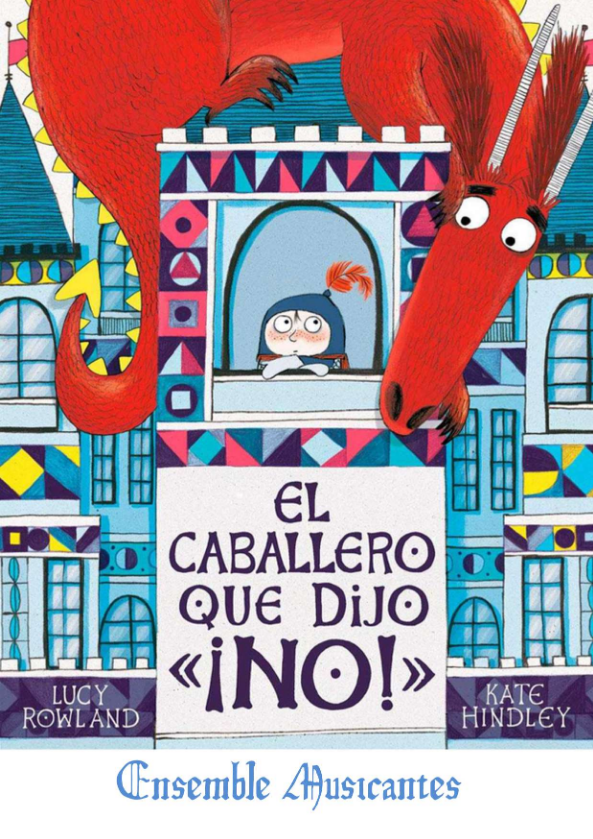
The Knight Who Said NO It's a children's show set in the Middle Ages, narrated by Carmen Barrios, that combines storytelling, projected images, and live music performed on historical instruments. Throughout the performance, the audience is introduced to the medieval musical context, learning about both the instruments and their origins.
The project's main objective is to entertain and educate, conveying values such as friendship, respect, empathy, and courage, while introducing young people to early music and fostering an interest in live performances. To achieve this, Ensemble Musicantes accompanies the narration with a musical repertoire that complements the story's development, using a wide variety of wind, string, and percussion instruments, faithful to medieval iconographic tradition.
The story introduces Ned, a young boy who always obeys until he discovers the importance of knowing how to say "no." Through his evolution, the narrative addresses, in an educational and relatable way, the development of self-affirmation in childhood, conveying the balance between obedience and personal autonomy.
Spring in Granada
May 29th. Albuñol
The Seville-based Ensemble Toranzo is a group specializing in early Renaissance music, renowned for its solid artistic and pedagogical track record in Andalusia. Their work is distinguished by a historically informed approach based on research, the recovery of original repertoires, and the recreation of musical contexts linked to key moments in cultural history.
Throughout its history, the ensemble has cultivated a unique approach that combines artistic excellence, historical outreach, and a strong educational focus, making it an ideal group for educational projects aimed at children and young people. Its members possess extensive experience both in performing on historical instruments and in adapting content to accessible formats.
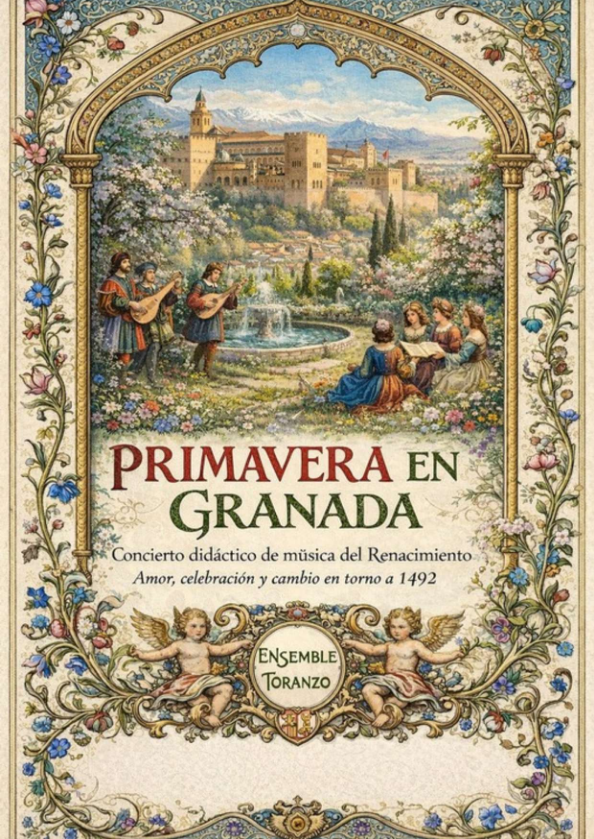
As part of FESTIKIDS, they present the premiere of the program “Spring in Granada”, This program, focused on the year 1492, offers a musical journey through the era of the Catholic Monarchs and the first contacts between Europe and the New World. Through music, it allows students to understand a key moment of cultural, political, and artistic transition, positioning Granada as a fundamental setting for this historical period.